Every Good Deed and Other Stories

ISBN 9781910263082
272pp
Persephone's second volume of Whipple short stories (the first was The Closed Door and Other Stories) consists of a novella – Every Good Deed, originally published separately in 1944, about an adoption gone awry – and nine short stories.
The point about reading Dorothy Whipple is that there is an intimacy in her writing. But naturally this intimacy does not appeal to everyone. We feel that it appeals to people who like the writer Elizabeth Taylor and yet this is not always the case: we have a friend who adores Elizabeth Taylor but cannot love Dorothy Whipple (yes, there are people).
Yet one cannot but suspect that the younger novelist learnt a great deal from Dorothy Whipple. Take the short story in Every Good Deed and Other Stories called ‘Boarding House’, written in c. 1940. It is about a rather deplorable woman called Mrs Moore who ruins things for everyone else when she arrives at a small hotel – because she is bored and lonely. ‘“It’s cutlet for cutlet,” she thought bitterly. “I can’t entertain, so no one entertains me now. To think that I should have to come to a place like this. After the life,” she thought, “I’ve lived.”’ The last sentence is pure Elizabeth Taylor. A lesser writer would have put ‘After the life I’ve lived,’ she thought. Why it is funnier and so much more expressive to put ‘she thought’ in the middle of the sentence is a mystery; but it makes all the difference. And why ‘It’s cutlet for cutlet’ is funny is also a mystery, but it certainly is.
For more on Every Good Deed and Other Stories, take a look at the Persephone Perspective.
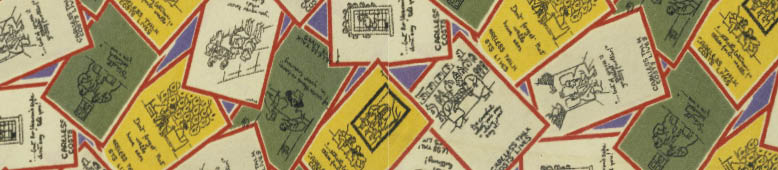
Endpaper
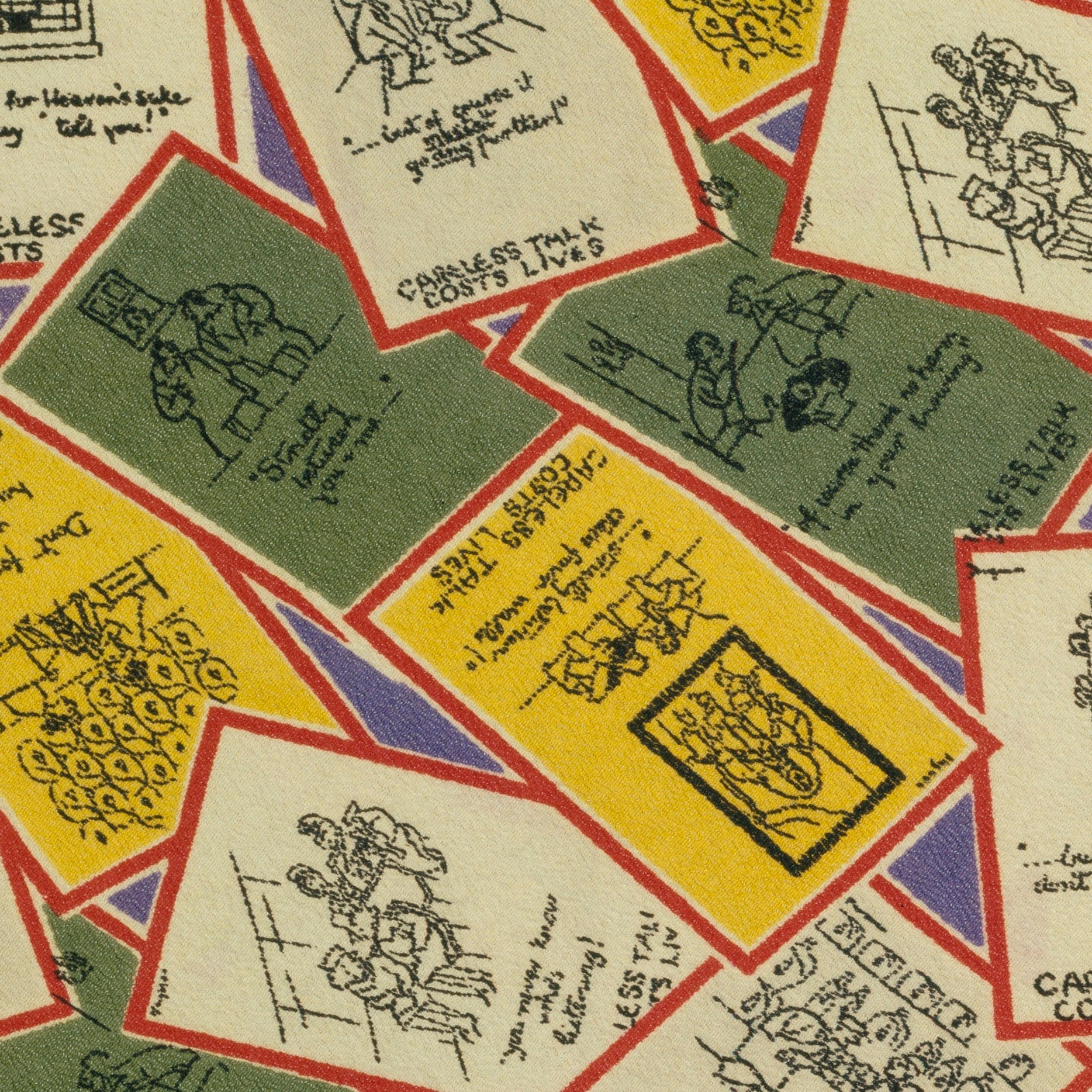
Taken from a 1950s dress fabric that is sometimes on display in the window of the Persephone bookshop.
Picture Caption
'The Critics' (1922) by Harold Harvey
Original: $53.62
-65%$53.62
$18.77More Images

Every Good Deed and Other Stories
ISBN 9781910263082
272pp
Persephone's second volume of Whipple short stories (the first was The Closed Door and Other Stories) consists of a novella – Every Good Deed, originally published separately in 1944, about an adoption gone awry – and nine short stories.
The point about reading Dorothy Whipple is that there is an intimacy in her writing. But naturally this intimacy does not appeal to everyone. We feel that it appeals to people who like the writer Elizabeth Taylor and yet this is not always the case: we have a friend who adores Elizabeth Taylor but cannot love Dorothy Whipple (yes, there are people).
Yet one cannot but suspect that the younger novelist learnt a great deal from Dorothy Whipple. Take the short story in Every Good Deed and Other Stories called ‘Boarding House’, written in c. 1940. It is about a rather deplorable woman called Mrs Moore who ruins things for everyone else when she arrives at a small hotel – because she is bored and lonely. ‘“It’s cutlet for cutlet,” she thought bitterly. “I can’t entertain, so no one entertains me now. To think that I should have to come to a place like this. After the life,” she thought, “I’ve lived.”’ The last sentence is pure Elizabeth Taylor. A lesser writer would have put ‘After the life I’ve lived,’ she thought. Why it is funnier and so much more expressive to put ‘she thought’ in the middle of the sentence is a mystery; but it makes all the difference. And why ‘It’s cutlet for cutlet’ is funny is also a mystery, but it certainly is.
For more on Every Good Deed and Other Stories, take a look at the Persephone Perspective.
Endpaper
Taken from a 1950s dress fabric that is sometimes on display in the window of the Persephone bookshop.
Picture Caption
'The Critics' (1922) by Harold Harvey
Product Information
Product Information
Shipping & Returns
Shipping & Returns
Description
ISBN 9781910263082
272pp
Persephone's second volume of Whipple short stories (the first was The Closed Door and Other Stories) consists of a novella – Every Good Deed, originally published separately in 1944, about an adoption gone awry – and nine short stories.
The point about reading Dorothy Whipple is that there is an intimacy in her writing. But naturally this intimacy does not appeal to everyone. We feel that it appeals to people who like the writer Elizabeth Taylor and yet this is not always the case: we have a friend who adores Elizabeth Taylor but cannot love Dorothy Whipple (yes, there are people).
Yet one cannot but suspect that the younger novelist learnt a great deal from Dorothy Whipple. Take the short story in Every Good Deed and Other Stories called ‘Boarding House’, written in c. 1940. It is about a rather deplorable woman called Mrs Moore who ruins things for everyone else when she arrives at a small hotel – because she is bored and lonely. ‘“It’s cutlet for cutlet,” she thought bitterly. “I can’t entertain, so no one entertains me now. To think that I should have to come to a place like this. After the life,” she thought, “I’ve lived.”’ The last sentence is pure Elizabeth Taylor. A lesser writer would have put ‘After the life I’ve lived,’ she thought. Why it is funnier and so much more expressive to put ‘she thought’ in the middle of the sentence is a mystery; but it makes all the difference. And why ‘It’s cutlet for cutlet’ is funny is also a mystery, but it certainly is.
For more on Every Good Deed and Other Stories, take a look at the Persephone Perspective.
Endpaper
Taken from a 1950s dress fabric that is sometimes on display in the window of the Persephone bookshop.
Picture Caption
'The Critics' (1922) by Harold Harvey